
Best Real Estate Websites with IDX help you to sell more properties. Getting quality leads is tough when buyers spend so much time on big real estate sites like Zillow. But what if you could pull those same property listings straight onto your own website?
IDX (Internet Data Exchange) lets you display up-to-date MLS listings directly on your real estate website, giving visitors no reason to leave your site to search elsewhere.
The right IDX website does more than just show listings. It captures leads, works with your CRM, and helps you climb search rankings.
The best platforms make it easy for clients to search properties while you collect their info automatically. That’s a win-win, honestly.
Choosing an IDX provider can feel overwhelming with so many options out there. I’ll walk you through the top real estate websites with IDX in 2026, what features matter most, and how to pick the right one for your business needs.
Key Takeaways
- IDX technology displays live MLS listings on your website to keep visitors from going to competitor sites
- The best IDX platforms combine property search tools with lead capture systems and CRM integration
- Your choice of IDX provider should match your business size and include strong SEO features for better search rankings
What Is an IDX Real Estate Website?
An IDX real estate website shows MLS listings right on your site using Internet Data Exchange technology. You can display property data from your local multiple listing service, turning your website into a searchable database of homes for sale.
How IDX Works: Internet Data Exchange and MLS Integration
IDX is the legal framework that lets me share MLS listings on my website. When I integrate IDX, I’m connecting my site to the multiple listing service database in my area.
The technology pulls listing data from the MLS and displays it on my website in real time. When a new property hits the market or a listing updates, those changes pop up on my site automatically.
MLS integration happens through an IDX feed. My local MLS sends property info to my website through this feed, updating regularly—sometimes several times a day.
The system includes photos, pricing, property details, and listing status. To use IDX, I need to be a licensed real estate professional and a member of the MLS.
The MLS sets rules about how I display their data, including requirements for listing attribution and update frequency. It can be strict, but it keeps everyone on the same page.
Differences Between Real Estate Websites and IDX Websites
A basic real estate website might just have my contact info, testimonials, and a few featured properties I add myself. An IDX website does all that, plus it shows the full MLS database.
Without IDX, I can only show my own listings or properties I upload manually. With IDX, visitors can browse thousands of properties from all brokerages in my MLS.
IDX websites include advanced search features like map-based browsing, price filters, and saved search options. Basic sites just can’t compete on those tools.
Really, IDX turns my website from a digital business card into a property search portal that rivals sites like Zillow.
Benefits of IDX for Realtors and Brokerages
IDX helps me capture leads directly on my website instead of losing them to the big real estate portals. When buyers search for homes on my site, they reach out to me first.
This technology builds credibility because I’m offering the same comprehensive property data as major sites. Buyers start to see me as a real resource with access to everything on the market.
IDX boosts my website’s SEO performance. Property listings create hundreds—or even thousands—of fresh pages for search engines to index.
That means more potential clients find my website when they search for homes in my area. I can track which properties visitors view and use that info to follow up with relevant listings.
Many IDX systems include lead capture tools that prompt visitors to register for saved searches or property alerts. It’s a solid way to keep people coming back.
Top Real Estate Websites with IDX: 2026 Rankings
I’ve tested dozens of IDX platforms over the years. Each one brings different strengths, depending on your budget and goals.
Some shine at lead capture, while others focus on design or automation. Let’s dig into some of the standouts.
Placester: Best Value IDX Website for Agents
Placester stands out as one of the most affordable IDX solutions without cutting essential features. The platform offers unlimited IDX listings from your local MLS, so clients can search every available property right on your site.
I like that Placester includes lead capture forms and basic CRM tools in their standard plans. Their website builder uses drag-and-drop tech, so you don’t need coding skills to get a professional site up and running.
Their templates are mobile-responsive and load quickly, which helps with search rankings. That’s not something to overlook.
Key Features:
- Unlimited MLS listings
- Built-in lead capture tools
- Mobile-responsive templates
- Starting price around $79/month
The platform also has SEO tools and blogging capabilities. Customer support gets back to you quickly via email or phone during business hours.
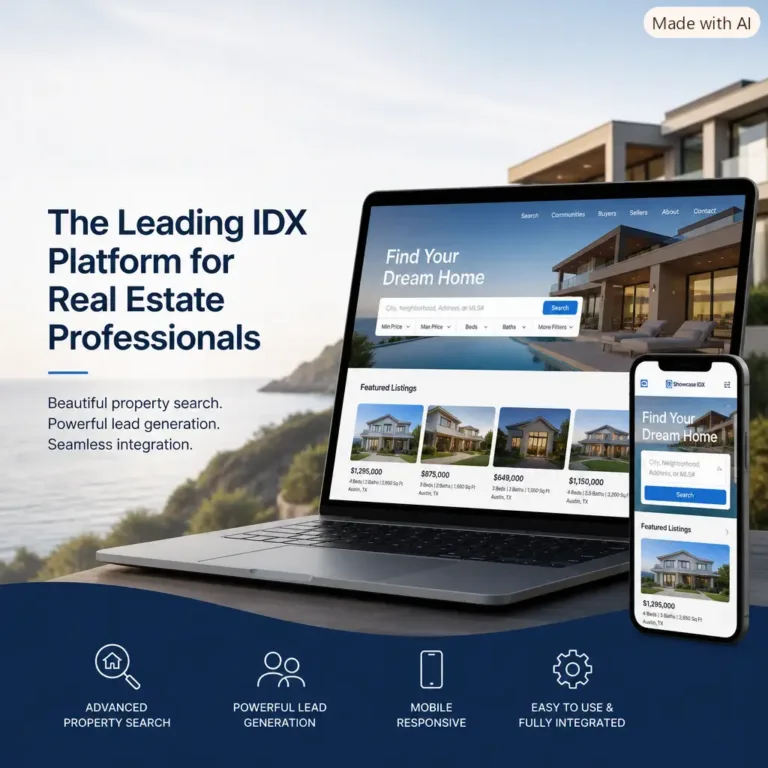
Showcase IDX: Leading WordPress IDX Plugin
Showcase IDX works as a plugin for WordPress sites, giving you full control over your website’s design and features. This flexibility makes it popular among agents who want to build a custom real estate website without starting from scratch.
The plugin displays MLS data in real time and includes advanced search filters so visitors can find properties faster. I’ve noticed the map search feature keeps users engaged longer than basic list views.
Lead generation tools include property alerts, saved searches, and contact forms that play nicely with popular CRMs.
Notable Features:
- WordPress compatibility
- Real-time MLS data
- Advanced map search
- Custom property alerts
You’ll need a WordPress site and a bit of technical know-how to set it up. Pricing starts around $69/month, depending on your MLS requirements.
AgentFire: Stylish and Automated IDX Solutions
AgentFire combines beautiful design with powerful automation. Their websites look modern and professional right out of the box, which helps you make a strong first impression.
The platform includes AI-powered chatbots that engage visitors 24/7 and collect lead info automatically. I’ve seen these bots answer common property and neighborhood questions without any manual input.
AgentFire also offers automated email campaigns that send property updates to leads based on their search preferences. Their IDX integration pulls listings from your MLS and displays them with high-quality images and detailed information.
The mobile experience is smooth, and pages load fast. That matters more than people realize.
Standout Elements:
- AI chatbot technology
- Automated email marketing
- Premium design templates
- Mobile-optimized experience
Pricing usually starts around $249/month, so it’s more of a mid-range to premium option.
Real Geeks: All-in-One IDX and Lead Generation
Real Geeks focuses hard on converting website visitors into clients. The platform combines IDX integration with aggressive lead capture strategies and follow-up tools.
Every page includes multiple conversion opportunities—pop-ups, exit-intent forms, registration prompts. Some agents find it a bit pushy, but honestly, the numbers show it generates more leads than passive websites.
The built-in CRM helps you manage these leads with automated drip campaigns and task reminders. I like that Real Geeks includes Google and Facebook ad management in their higher-tier plans.
Their team can run your ads and send traffic straight to your IDX listings. That’s a time-saver if you’re not an ad expert.
Core Components:
- Aggressive lead capture system
- Integrated CRM and follow-up
- PPC advertising management
- Property valuation tools
Plans start around $299/month and include support from a dedicated account manager.
Agent Image: High-End Custom IDX Websites
Agent Image caters to established agents and teams who want a fully custom website design. Instead of templates, their designers create unique layouts based on your brand and preferences.
The custom approach means longer development times—usually 6-8 weeks from start to launch. But the final product stands out from competitor sites.
Their IDX integration is clean and fast, with search tools that rival major portals. Agent Image includes professional photography, content writing, and ongoing SEO services.
They handle technical updates and maintenance, so you can focus on selling real estate, not managing a website.
Premium Features:
- Custom website design
- Professional content creation
- Ongoing SEO services
- White-glove support
Expect to invest $5,000–$15,000 for initial development, plus monthly fees starting around $500. You get what you pay for here.
iHomefinder: Centralized IDX with Built-in CRM
iHomefinder provides robust IDX tools that work as a standalone site or integrate with other platforms. Their strength? Data accuracy and update frequency—listings refresh every 15 minutes in most markets.
The platform includes a full-featured CRM that tracks lead behavior automatically. You can see which properties each lead viewed, how long they stayed, and what search criteria they used.
This info helps you personalize your follow-up. I find their reporting tools especially useful for figuring out which listings get the most attention.
Primary Benefits:
- Frequent listing updates
- Behavioral tracking CRM
- Multiple integration options
- Detailed analytics dashboard
Pricing varies based on your MLS and chosen features, starting around $100/month.
Luxury Presence: Premium IDX for High-End Brands
Luxury Presence targets luxury agents and brokerages with sophisticated design and premium features. Their websites look more like high-end magazine layouts than typical real estate sites.
The platform offers concierge-level service with a dedicated team handling everything from content updates to SEO strategy. They create custom neighborhood pages, property showcases, and agent bio sections that show off your expertise.
IDX integration focuses on presenting luxury listings with large photos, video tours, and detailed property descriptions. The search experience is refined and intuitive—perfect for buyers who expect a premium online experience.
Luxury-Focused Features:
- Magazine-quality design
- Dedicated support team
- Custom neighborhood content
- Video integration
Pricing starts around $1,000/month, so it’s definitely a premium choice. But if you work in the luxury market, it’s worth a look.
Essential Features of the Best Real Estate IDX Websites
The best IDX websites combine powerful property search tools with lead capture systems and seamless mobile experiences. These features work together to keep visitors engaged while helping you convert browsers into clients.
Advanced Property Search and Filters
A strong property search system is the backbone of any IDX website. I need visitors to find exactly what they’re looking for without getting frustrated or bouncing.
Basic filters like price range, bedrooms, and property type are just the start. The best IDX search tools add options like square footage, lot size, year built, and school district.
Some platforms even let visitors search by commute time or amenities like pools or hardwood floors. I always look for IDX functionality that updates in real time from the MLS.
This keeps listings accurate and avoids the headache of showing unavailable properties. The search should also save visitor preferences so they can pick up where they left off next time.
Speed matters, too. If my IDX search takes more than a few seconds to load, I risk losing potential clients to competitor sites or big portals.
Lead Capture Forms and Automation Tools
Lead capture forms turn anonymous visitors into contacts I can nurture. I place these throughout my IDX website to collect information without being pushy.
The most effective approach uses gentle gates. Visitors can browse a few listings freely, then see a simple form asking for their email to view more details or save favorites.
I keep these forms short—just name and email usually—because long forms scare people away. Automation tools step in as soon as someone submits their info.
I set up automatic email sequences that send new listings matching their search criteria. These drip campaigns keep me top-of-mind without daily manual work.
Automation also alerts me when leads take specific actions. If someone views the same property three times or suddenly starts looking at higher-priced homes, I get notified so I can reach out at just the right moment.
Mobile Responsiveness and User Experience
More than half of property searches happen on phones. My IDX website has to work flawlessly on every device or I lose potential clients immediately.
Mobile responsiveness is more than shrinking my desktop site. Buttons need to be thumb-friendly, forms should auto-fill when possible, and images must load quickly even on slow connections.
The search experience on a phone should feel natural, not like a cramped version of the desktop site. I prioritize clean navigation and fast load times.
If visitors have to pinch and zoom to read property details or wait more than three seconds for photos, they’re gone. Many modern real estate website solutions now offer mobile apps that provide a smoother experience with push notifications for new listings.
User experience extends to how information appears. Property details should be scannable, with clear headings, bullet points for features, and obvious contact buttons.
Map-Based and Custom Searches
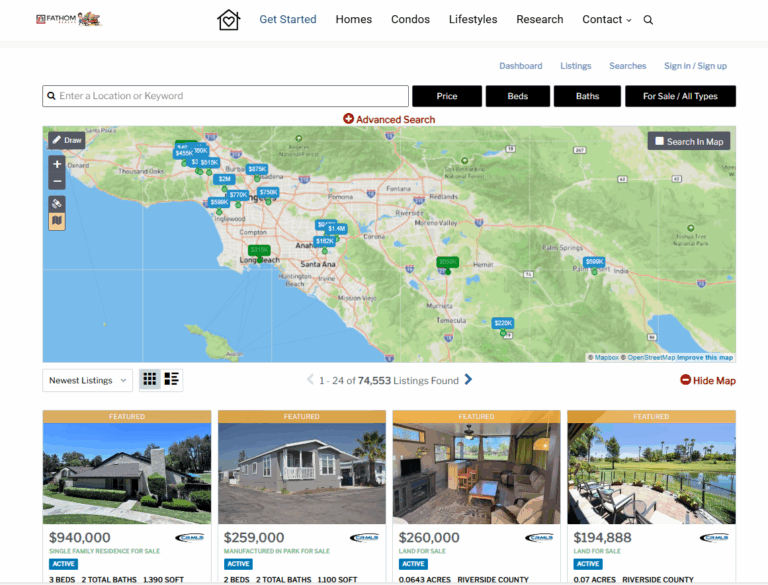
Map search changes how visitors explore properties. Instead of scrolling endless lists, they can see where homes are and draw boundaries around neighborhoods they like.
I use IDX platforms with interactive maps and clustering. When zoomed out, properties group by area; as visitors zoom in, individual listings pop up with price tags and photos.
They can click directly from the map to view full property details. Custom searches let me build landing pages for different buyer types—like waterfront homes, properties under $300,000, or houses in top-rated school districts.
These targeted pages boost my SEO and speak directly to specific buyer needs. The best custom searches include polygon drawing tools so visitors can outline their ideal area, not just pick from ZIP codes or city boundaries.
This flexibility helps them find hidden gems in neighborhoods they might not have considered.
SEO and Content Optimization for IDX Websites
IDX websites need strong SEO tools and fresh content to rank well in search results. That means using smart optimization strategies, keeping MLS data current, and creating helpful pages about local areas.
SEO Tools and Fast Track Strategies
I always start with technical SEO basics. Your IDX site needs fast load speeds, mobile optimization, and clean URL structures for property pages.
These basics help search engines crawl and index your listings. Fast track strategies include optimizing listing pages with unique descriptions, not just relying on MLS data feeds.
Add custom content to each property using local keywords and neighborhood details. This makes your pages stand out from thousands of sites showing the same listings.
Key optimization elements:
- Meta titles and descriptions for each listing
- Image alt text with location keywords
- Schema markup for property details
- Internal linking between listings and area pages
AI-powered content tools can help you scale this work faster. They generate unique property descriptions and market insights, but I always review AI content to keep it accurate and genuinely helpful.
MLS Coverage and Up-to-Date Listings
Up-to-date property listings are critical for SEO. Search engines favor sites with fresh content, and IDX feeds provide automatic updates from your MLS coverage area.
This constant refresh signals to Google that your site stays current. I make sure my IDX integration pulls new listings immediately—stale data hurts both user experience and search rankings.
Buyers lose trust when they click listings that sold weeks ago. The breadth of your MLS coverage matters too; more listings mean more indexed pages and more chances to rank for location-based searches.
Each property page can become a potential entry point for organic traffic.
Neighborhood and Community Pages
Neighborhood and community pages drive a lot of organic traffic to my site. These pages target searchers looking for area info, not just properties.
I create dedicated pages for each neighborhood in my market with local details buyers actually want. Essential content for area guides:
- School ratings and districts
- Local amenities and shopping
- Transportation and commute times
- Market report pages with pricing trends
Market reports add valuable data and position me as a local expert. I include median prices, inventory levels, and sales trends for each area.
Neighborhood guides work best when they go beyond basic facts. I add photos, video tours, and personal insights about what makes each community special.
This original content separates my pages from competitors copying the same MLS descriptions.
IDX Platform Integration and Customization Options
The best IDX platforms offer different ways to manage your leads and make your website match your brand. Some come with their own customer management tools, while others connect to systems you already use.
Built-in and Integrated CRM Solutions
Many IDX platforms include a built-in CRM so you can capture and track leads without extra software. These all-in-one platforms save time because everything works together from the start.
When a visitor searches properties on your site, their information goes straight into the CRM. You can see what listings they viewed, how often they visit, and when they’re most active.
Some agents prefer using their existing CRM. In that case, I look for IDX platforms that offer integrations with popular tools like Salesforce, Follow Up Boss, or LionDesk.
These connections let data flow between systems automatically.
Customizable Templates and Branding
Your website should look like your business, not a cookie-cutter template. Good IDX platforms provide customizable templates where you can add your logo, colors, and fonts.
Basic customization includes changing header images and button colors. Advanced options let you adjust layouts, add custom pages, and modify search filters to match your market.
I like platforms with drag-and-drop editors—they make customization easier for agents who aren’t tech-savvy. You can move elements around, add text blocks, and create unique property pages without writing code.
CRM Integration and Lead Routing
Lead routing determines where new contacts go after they sign up on your website. Simple systems send all leads to one email address, but better platforms let you set up rules.
You can route leads based on location, property type, or price range. If you work with a team, this feature sends luxury listings to one agent and starter homes to another automatically.
The strongest IDX platforms connect lead routing with CRM integration. When a lead comes in, it goes to both your CRM and the right team member at the same time.
This setup means no lead sits waiting while you manually sort through contacts.
Additional IDX Functionalities to Enhance Your Real Estate Website
Modern IDX systems offer tools that go way beyond basic property listings. They help you capture more leads and keep visitors engaged longer on your site.
These features transform your website from a simple search platform into an interactive resource buyers return to throughout their home search journey.
Saved Searches and Property Alerts
Saved searches keep potential buyers connected to your website long after their first visit. This feature lets visitors save their search criteria and get automatic email alerts when new properties match their preferences.
Property alerts monitor the MLS feed and notify users immediately when listings appear that fit their saved parameters. I’ve found this creates multiple touchpoints with leads without any manual effort.
Most IDX systems let users save unlimited searches with filters for price, bedrooms, location, and features. The alerts usually include property photos, basic details, and a direct link back to your website.
This kind of automated follow-up keeps your brand in front of buyers during their search and often brings them back to your site before they check other platforms.
Virtual Tours and Listing Showcases
Virtual tours are a must for modern real estate websites. I use IDX integrations that support 3D walkthroughs, video tours, and photo galleries right inside property listings.
A listings showcase feature lets me highlight specific properties on my homepage or dedicated pages. I can feature my own listings, open houses, or price-reduced homes to grab attention.
These visual tools keep visitors on my site longer and give them a better sense of properties before scheduling showings. Many IDX providers now support embedded virtual tour platforms, so it’s easy to add immersive experiences without tech skills.
The showcase functionality also helps with SEO since unique property presentations create more indexed pages on my domain.
Home Valuation and Mortgage Tools
I include a home valuation tool on my website because it attracts seller leads who want to know their property’s worth. These tools pull recent sales data and provide instant estimates, capturing contact info in exchange for the full report.
A mortgage calculator helps buyers understand their purchasing power and monthly payments. Visitors who use these calculators are usually more serious about buying and closer to making a decision.
Both tools position me as a helpful resource, not just another agent pushing listings. The home valuation feature typically generates separate lead forms from property searches, helping me spot potential sellers.
Mortgage calculators often integrate with lending partners, creating an extra service I can offer clients.
Map-Based Interactive Features
Map-based search is my most-used IDX feature because it matches how buyers actually think about their home search. Visitors can zoom into neighborhoods, draw custom boundaries, and see listings plotted in real-time on an interactive map.
I prefer IDX systems with polygon search, letting users outline exact areas they’re interested in—not just pick from zip codes or city boundaries. This gives buyers more control and helps me understand their true geographic preferences.
The best map features include school boundaries, commute time calculators, and local amenities like parks and shopping centers. These layers help buyers evaluate neighborhoods alongside properties.
Visitors who use map search usually spend more time on my site and submit more detailed inquiry forms with specific location requests.
Choosing the Best IDX Website for Agents, Teams, and Brokerages
Different real estate professionals need different things from their IDX website. A solo agent working alone has different needs than a 50-person brokerage with multiple offices.
Considerations for Solo Agents and Teams
Solo agents need simple, affordable IDX solutions that don’t require technical skills to set up. I recommend looking for platforms with easy-to-use interfaces and clear pricing—like the options at SEO Real Estate Wagon.
Most solo agents do well with basic search features and lead capture forms. You don’t need complex tools you’ll never use.
Teams have different requirements. They need user assignment features so leads go to the right agent.
Look for IDX providers that let you create separate agent profiles and track who gets which leads. Budget matters more for solo agents—teams can split costs and invest in better tools.
Support is critical when you’re working alone. Choose an IDX provider that offers phone or chat support during business hours.
Teams might be able to handle some issues internally, but solo agents need outside help.
Brokerage-Level IDX Requirements
Brokerages need IDX solutions that can handle hundreds or thousands of listings across multiple agents. The platform should support agent websites, team pages, and a main brokerage site.
Multi-user management is essential at the brokerage level. You’ll want tools that let administrators control branding, manage permissions, and oversee all agent activities from one dashboard.
White-label options matter for brokerages. Your IDX integration should match your brand without showing the provider’s logo on every page.
Key brokerage features include:
- Centralized lead distribution
- Custom fields for different markets
- Reporting across all agents
- Agent performance tracking
- Branded mobile apps
Many brokerages need MLS data from multiple regions. Make sure your IDX provider supports all the MLSs where your agents work.
Scalability, Support, and Compliance
Your IDX website should grow with your business. Ask if the platform can handle more agents, more traffic, and extra features as you expand. You want something that won’t box you in later.
Check if pricing scales in a way that makes sense for you. Some providers charge per agent, while others base fees on features or traffic levels.
Support quality really varies between IDX providers. I always test support before buying—try asking a few technical questions during the sales process to see how they respond.
Compliance with MLS rules isn’t optional. Your IDX provider needs to follow all data display rules, update frequencies, and attribution requirements. It’s smart to ask if they handle compliance updates automatically when MLS rules change.
Security counts too, no question about it. Look for providers that offer SSL certificates, regular backups, and protection against data breaches. Your clients’ info deserves to stay safe.
Frequently Asked Questions
Adding IDX to your site means picking a provider and connecting it to your local MLS. Some platforms offer free or low-cost options with basic features, but the best tools depend on your budget, tech skills, and whether you want built-in CRM capabilities.
How can I integrate IDX into my real estate website?
I’d start by finding an IDX provider that works with your local MLS. Most providers give you plugins or embed codes you can add right to your site.
If you use WordPress, many IDX services have plugins that install in just a few clicks. You’ll need to connect your MLS credentials and set up which listings you want to show.
For custom websites, it’s usually best to work with a developer who can integrate the IDX feed using the provider’s API. That way, you get more control over the design and features.
What are the top free real estate websites that include IDX?
Honestly, truly free IDX options are rare since MLS data access usually requires paid subscriptions. Some platforms do offer free trials or basic plans with limited features, though.
Zillow Premier Agent and Realtor.com give you free profile pages with IDX listings, but you don’t actually own the website. These are fine if you’re just starting out and want a basic online presence.
Some website builders have entry-level plans around $30-50 per month with basic IDX included. Not totally free, but probably the cheapest way to display MLS listings on your own domain. If you want more details on pricing, you can check out this resource.
Which website builder is best for creating an IDX real estate site?
The best website builder really depends on your tech comfort and budget. WordPress with an IDX plugin gives you the most flexibility and customization—hard to beat that if you like tinkering.
For agents who want something easy, I’d look at platforms like Placester or Agent Image. These have drag-and-drop builders made for real estate, with IDX already built in.
If you need advanced features and AI tools, maybe try platforms like Ylopo or kvCORE. They cost more, but you get lead generation tools and automated follow-ups, which can be a game changer.
Can you recommend some real estate CRM systems that support IDX?
I use CRM systems that connect right to IDX feeds so I can track which properties my leads view. Follow Up Boss works well with most IDX providers and lets me manage conversations in one spot.
kvCORE gives you both IDX and CRM in one platform, which is super convenient for tracking what leads are up to. It logs property searches and sends alerts when leads come back to view listings.
LionDesk and BoomTown are other good options I’ve seen agents use. Both sync with popular IDX providers and include email marketing tools to help nurture leads over time.
What are some highly rated IDX solutions for individual realtors?
I recommend IDX Broker for solo agents because it works with almost every website platform and offers reliable MLS data feeds. The pricing is reasonable and grows with your business.
Showcase IDX is another one I’ve seen individual realtors use with solid results. It’s got clean property search tools and mobile-responsive designs that keep visitors around longer.
If you’re on a tight budget, maybe start with iHomefinder. It has basic IDX features at a lower price while still giving you accurate listing data.
Which platforms are considered the gold standard for IDX real estate website design?
Honestly, if you want something truly premium, custom development firms like TheMangoAI and Triple Minds always pop up first in my mind. They craft fully customized sites loaded with advanced IDX features and, lately, some pretty cool AI touches.
Real Geeks stands out for agents who want a solid mix of sharp design and strong lead generation. Their IDX setup keeps buyers glued to your site—no more losing folks to Zillow every time they want to peek at a listing.
When it comes to enterprise-level brokerages, Luxury Presence feels like the gold standard. Their visuals are stunning, and their IDX integration just works, especially if you’re marketing high-end properties.