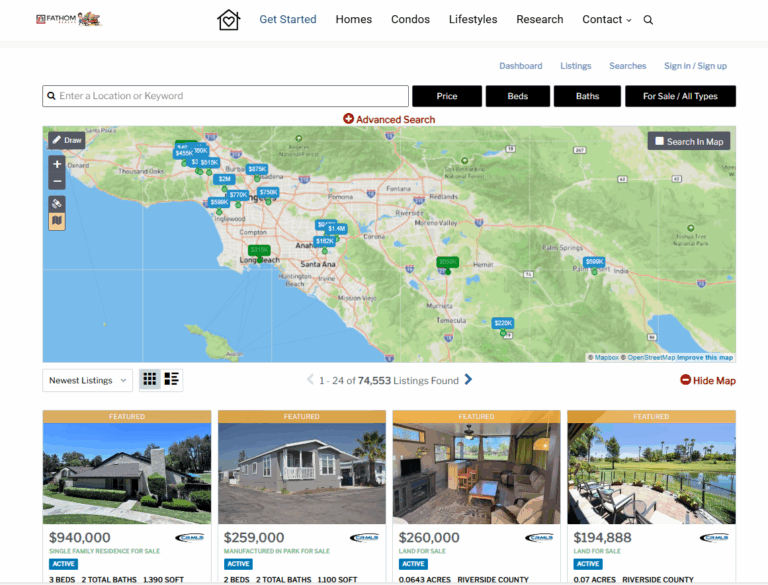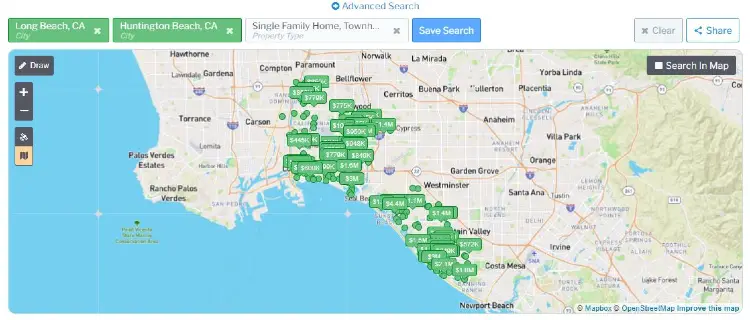

Compare Showcase IDX to every major IDX in 2026. See real SEO differences, faster load speeds, and why agents switch for better rankings and more leads.

Maybe you’ve heard that IDX plugins just show listings. That’s not quite true.
The way your IDX plugin loads pages, structures data, and handles indexing can make or break your search rankings. Showcase IDX is built to win on all three fronts.
Let’s get into why your choice of IDX plugin matters more than you might think. Picking the right one could be the difference between showing up on page one or getting buried in search results.
The SEO Features That Set Showcase IDX Apart

Clean listing pages, fresh local content, and built-in tools turn your site into a real search engine magnet. These features work together so your pages actually show up when buyers and sellers search for homes in your area.
Search-Engine-Friendly Listing Pages
Your listing pages load fast and stay clean. Search engines love that.
Instead of clunky code that slows things down, you get streamlined pages built to rank. Each listing gets its own unique URL with real property details, not duplicate content copied from the MLS feed.
Google can actually read and index every single listing on your site. You also get proper meta tags and structured data baked right in.
That’s the technical stuff that tells search engines exactly what’s on the page. You don’t have to hire a developer to fix it.
Indexable Community and Property Content
You get neighborhood and community pages built to get indexed by Google. These aren’t thin, generic pages with just a few stats.
Each community page includes local details like schools, amenities, and market trends. That kind of content gives you a real reason to rank for searches like “homes in [neighborhood name].”
Your property content goes beyond the basic MLS description. This extra depth helps your pages stand out from other agents using the same syndicated feed.
Since this content is unique to your site, you avoid duplicate content penalties. That’s a real SEO problem that trips up a lot of other IDX platforms.
Built-In Content and Internal Linking Tools
Tools built into your dashboard help you create blog posts, landing pages, and other content without needing a separate plugin. Everything stays organized and search-friendly from one place.
The platform also makes internal linking simple. You can connect your blog posts to relevant listings and community pages with just a few clicks.
That helps search engines understand how your site fits together. Strong internal linking also keeps visitors on your site longer.
You don’t need extra plugins or manual coding to make this happen. It’s already part of your setup.
How Other IDX Platforms Handle Organic Visibility
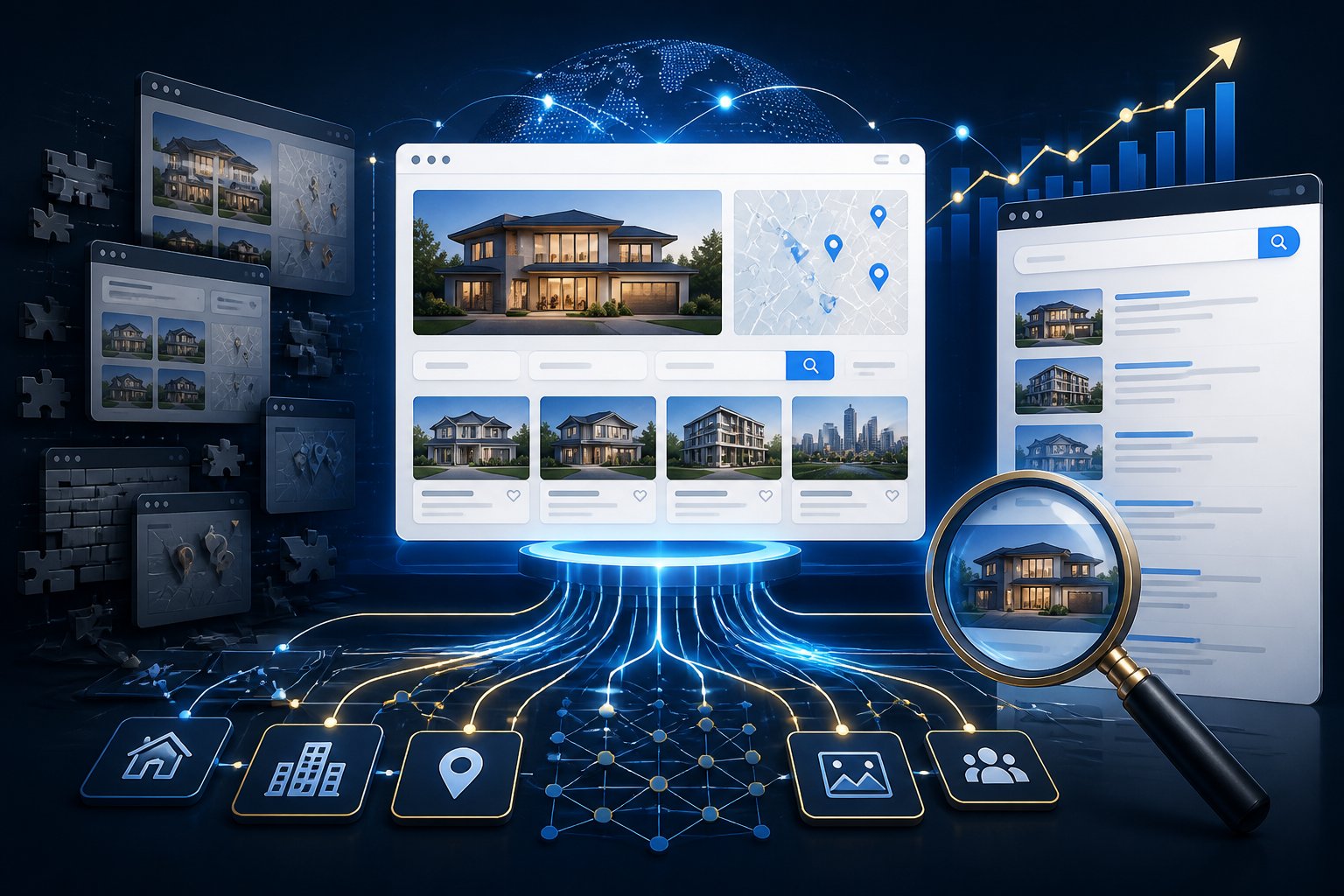
Most IDX providers focus on getting listings on your site fast. But they often skip the SEO groundwork that helps you rank.
Many popular platforms share the same weak spots when it comes to organic search performance.
Template-Driven Pages and Duplicate Content Risks
Most IDX platforms pull listing data into pre-built templates. These templates look the same across hundreds of agent websites!
This creates a big problem. Search engines see similar or identical property descriptions on multiple sites, which can trigger duplicate content flags.
Your site might get lost in a sea of nearly identical pages. Here’s what typically happens:
- Property descriptions get copied straight from the MLS feed
- Page layouts follow the same structure as competitor sites using the same IDX provider
- Search engines struggle to figure out which version deserves to rank
You end up competing against your own industry peers instead of standing out.
Limited Control Over Metadata and URLs
Many IDX systems lock you into fixed URL structures and auto-generated metadata. You can’t customize title tags, meta descriptions, or URL slugs the way you need to for strong SEO.
Your listing pages might have generic titles like “Property Details” instead of location-specific, keyword-rich titles that help you rank for local searches. Your URLs often look messy too, filled with random ID numbers instead of readable, search-friendly text.
Without this control, you miss chances to target the exact phrases buyers and sellers type into Google. Your pages exist, but they’re not optimized to compete for the search terms that actually drive traffic.
Dependence on External SEO Plugins and Custom Development
Most IDX platforms don’t build SEO tools into their core system. You’re left patching things together.
You need third-party plugins, custom coding, or expensive developer hours just to fix basic SEO gaps. This adds real costs to your marketing budget.
You’re paying:
- Monthly plugin subscription fees
- Developer rates for custom fixes
- Time spent managing multiple tools that don’t always work well together
Every update to your IDX platform risks breaking your custom SEO work. You end up maintaining a fragile setup instead of focusing on growing your business.
Comparing Indexation, Speed, and Crawlability

The way an IDX plugin talks to search engines can make or break your SEO results. You’ll see big differences in how fast Google finds your listings, how well your pages load, and whether search engines can actually read your property data.
Google-Accessible Listing and Search Pages
Here’s the exciting part: Showcase IDX builds real, crawlable pages for your listings. Google can actually find and index them!
Many other IDX plugins load listings through iframes or JavaScript widgets. Search engines struggle to see inside these frames.
Your listings might exist on your site, but Google can’t read them. With Showcase IDX, each property gets its own unique URL.
Search bots can crawl these pages just like any other content on your website. This gives you a real shot at ranking for local searches.
Core Web Vitals and Mobile Performance
Google checks your site speed and mobile experience through something called Core Web Vitals. These scores affect where you rank in search results.
Showcase IDX loads faster than many competitors because it uses cleaner code. You won’t get bogged down with heavy scripts that slow your pages to a crawl.
Mobile users make up most home searches now. Your IDX plugin needs to work well on phones, not just desktops.
Slow-loading search results on mobile can push visitors away before they even see your listings. Speed really matters here!
Structured Data and Listing Updates
Structured data helps Google understand what’s on your page. Think of it like labels that tell search engines “this is a price” or “this is a bedroom count.”
Showcase IDX adds this schema markup automatically to your listing pages. Your listings can show up with rich snippets in search results, like star ratings or price ranges.
Fresh listing updates matter too. When a property sells or changes price, your IDX feed needs to reflect that fast.
Showcase IDX syncs updates quickly, so your pages stay accurate and Google keeps trusting your content as reliable and current!
Content Ownership and Lead Generation Impact
Who owns your content directly affects how many leads you actually get from Google. Some IDX platforms let you build pages that belong to you and rank on their own, while others keep everything locked behind their servers.
Creating Location Pages That Can Rank
You need real, editable pages for every neighborhood you serve. This is where the difference gets exciting fast.
Showcase IDX lets you build custom location pages with your own text, images, and headers. You control the URL structure, the meta descriptions, and the content blocks that Google actually reads.
Many other IDX providers only give you a search widget with no real page behind it. That means Google sees a thin page with no unique content, and thin pages rarely rank.
With true page ownership, you can add:
- Local market stats
- School district info
- Neighborhood photos
- Your own written descriptions
This turns each page into something Google wants to show people.
Capturing Long-Tail Property Searches
Long-tail searches are where you win big. Buyers don’t just search “homes for sale.”
They search things like “3 bedroom homes under $400k in [neighborhood]” or “condos near [school name].” These specific phrases have less competition and higher buyer intent.
Platforms that let you create unique, keyword-rich pages give you a real shot at ranking for these phrases. If your IDX platform generates duplicate content across thousands of sites, Google struggles to tell your page apart from everyone else’s.
You want a system built to:
- Target specific search phrases
- Avoid duplicate content across other agent sites
- Let you add unique details Google can index
That’s how you show up when buyers search for exactly what they want.
Turning Organic Visitors Into MLS Leads
Ranking is only half the win—you need those visitors to become real leads. Once someone lands on your page from Google, you want them one click away from viewing live MLS listings.
Showcase IDX keeps that path short: search results, property details, and save-listing prompts all sit on pages you own. This matters because visitors who land on your branded, content-rich page trust it more than a generic search widget.
They’re more likely to create an account, save a search, or request a showing. Fewer clicks and more trust mean more leads captured directly into your CRM, not lost to a third-party site that doesn’t share data back with you.
What Agents and Brokerages Should Evaluate Before Choosing
Picking an IDX provider means checking a few key things: how it handles MLS data, how much control you get over your site, and what SEO reporting actually costs you long-term. Get these wrong, and you’ll pay for it later with lost leads or hidden fees.
MLS Coverage and Data Display Rules
Not every IDX provider covers every MLS. You need to confirm your provider supports your local MLS and any neighboring markets you serve.
Check how fast listings update. Some providers refresh every 15 minutes. Others take hours, which means buyers see stale data.
Ask about display rules too. Each MLS has its own rules on what you can show, like sold prices or agent contact info.
A good provider builds these rules into the system, so you don’t get flagged for violations. Here’s what to ask:
- Does it support IDX and VOW feeds?
- How often does data refresh?
- Can it handle multiple MLS regions if you work across county lines?
Website Control, Branding, and Scalability
You want a site that feels unique, not just another cookie-cutter template. Make sure the provider lets you tweak colors, layouts, and the page structure until it actually feels like yours.
Can you add custom pages—like neighborhood guides or blog posts—without getting nickel-and-dimed? Some platforms box you into templates that wreck your SEO because every agent ends up with a twin site.
Scalability matters, especially if you’re dreaming bigger than solo agent life. If you plan to grow into a team or even a full brokerage, your IDX should stretch with you.
Ask if the platform can handle multiple agent profiles, team pages, and extra users. Ideally, you shouldn’t have to rebuild the whole thing just to add people.
SEO Reporting and Long-Term Costs
Plenty of providers promise “SEO tools,” but then leave you guessing about actual results. You need real reporting—stuff like organic traffic, keyword rankings, and performance data for each page.
Always ask to see a live demo of their reporting dashboard. If they dodge or can’t show you real numbers, I’d get suspicious.
Don’t get distracted by low setup fees. Some platforms lure you in cheap, then hit you later for extra listings, more agent seats, or “premium” SEO features. Demand a full breakdown of:
- Monthly platform fees
- SEO tool costs
- Fees for adding agents or listings
- Contract length and cancellation terms
Choosing the Right IDX Strategy for 2026
Your IDX platform choice could be the thing that makes or breaks your SEO this year. It all depends on your site’s size, your goals, and how much control you want over your content.
When Showcase IDX Is the Stronger SEO Fit
If you want real control over your listing pages, Showcase IDX gives you the room to get creative. You can tweak URLs, meta tags, and layouts without fighting the system.
This flexibility matters. Google likes sites that load quickly and have clean code. Showcase IDX usually delivers both, which can bump your rankings up.
You can also build custom landing pages—super useful if you’re targeting a specific neighborhood or property type. One agent talks about how using Showcase IDX for lead generation helped him grow his web presence without throwing money at ads.
When Another IDX Solution May Be Enough
Not everyone needs the fanciest setup. If you’re just starting or running a smaller site, a simpler IDX plugin could be just fine.
Some platforms offer:
- Lower monthly costs
- Faster setup times
- Basic search and listing features
If you keep your content fresh, these options can still give you a shot at decent SEO. You won’t have as much customization, but you also won’t have as much to manage.
If you’re testing things out or just building a small local site, a basic tool might save you some headaches and cash. Just be aware—you might run into limits as your traffic starts to grow.
Building an SEO Plan Beyond the IDX Platform
Your IDX tool is just one part of your SEO strategy. You also need strong content, fast page speed, and steady local search signals.
Stick with these basics, no matter which IDX platform you go with:
- Write unique descriptions for every listing page.
- Make sure your site works well on mobile devices.
- Build local backlinks from real estate directories.
- Update blog content that targets local search terms.
Your IDX platform can help with these steps. But honestly, it can’t do all the heavy lifting for you.